From right before the snow festival. I'm almost caught up now.
最近私は怠け者です。先週は運動しなかった。今年はよくトレーニングをしたい。たくさんトレーニングのゴールがあります。私のいとこに尋ねる。私のいとこはトレーニングについて知っています。
For the last week or two, I neglected my almost daily exercises at the gym in favor of watching my friend Dan’s Battlestar Galactica DVDs. When he went to Hawaii for the winter holiday, he brought the second season’s DVD set for the Sci-Fi Channel’s program with him. So I have been busy watching Captain Apollo and Starbuck kill Cylons instead of pumping iron and working up a sweat at Peare, my local health club.
I am a little concerned now, because I am off track for one of my new year’s goals, which is to train myself and build muscles and a body I am truly proud of. And while this may seem to be a vain and worthless goal to many of you, I have discovered that this makes me feel better about myself, both physically and mentally, and gives me much more confidence than I normally have. My social confidence improves, as well as my self-esteem. I always compared myself unfavorably to friends and relatives of mine in both high school and university when it came to fitness. And while I realize now that most of my friends were far more active than I may ever be, I still have many lingering insecurities about my body image. Is this is a result of unrealistic standards in the media or a projection of deeper self esteem problems caused by school bullies and the misguided efforts of authority figures in my childhood? Or its some other combination of trendy psycho-babble buzz words from a sappy Oprah rerun that remains to be sorted out by a competent therapist in the future. Whatever my problem may be, I’m going to pump more iron until I figure it out. So despite the risk of becoming someone who admires himself in the mirror far too frequently (if I ever reach that point) I have resolved to return to the gym in the evenings with the goal of attaining a “respectable buffness” by the end of July. Yesterday, I returned with the utmost fervor and zeal.
A “respectable buffness” shall include the following attainable, yet ambitious physical goals:
1. A flat stomach with at least partially visible muscle tone. I don’t necessarily think I will achieve the “washboard” abs one sees on late night infomercials for exercise equipment, but some noticeable definition and shrinkage in the midsection. This will require an alteration in diet, a beefed up cardio regimen, and a more comprehensive set of midsection exercises (something I often neglect despite the amount of time I spend in the gym). And while I am resigned to the fact I that my ultimate ideal goal (Brad Pitt’s abs in “Fight Club”) is out of my league, a partial approximation of this cinematic standard would prove satisfactory.
2. More defined shoulders and upper arms. Since training in Japan, I have definitely improved in the shoulders through the military press. I would like to see further progress in this area, as well as biceps and triceps especially. I do not necessarily want an increase in size, but an increase in muscle tone.
3. Larger and more defined forearms. Since student teaching and coming to Japan, I have found that my forearm strength is slowly decreasing. This trend must stop. A perceptible increase in forearm size and strength is definitely in order. The daily use of my hang board is in order.
4. The ability to do 3 sets of 15 pull-ups and or chin-ups on a daily basis. This being another area in which I have slacked since my rock-climbing days, a discipline to work toward this on a daily basis should be sufficient. This could also be because my weight has increased slightly since coming to Japan. While a miniscule increase that is mostly muscle, I wonder if I am losing that critical “strength to weight ratio” that is necessary in the sport of rock climbing.
5. I wish to successfully complete the Koriyama City 10 mile run in 60 minutes or less, and complete the other local Towa Road Race Half Marathon in under 1.5 hours. My time last year for the 10 mile race was 73 minutes. I finished the Half Marathon in 1 hour and 43 minutes. As long as I start training regularly now, I think the 10 mile race goal of 60 minutes should be achievable with few problems. I have done the race before, and I think I am more experienced with both pacing during the race and good preparation. The first half of the Towa Half Marathon was uphill and I wasn’t adequately prepared for that at the time. My half marathon goal will definitely be ambitious, and I will definitely focus on my “hill-work” this coming spring. I also did the Half Marathon after an English Camp where I got no sleep. This shouldn’t be a problem this year. Training for these races should also provide most of the necessary boost to my cardio regimen necessary for objectives one, three, and seven.
6. Increased flexibility. During high school as I trained daily in Taekwondo, I attained an exceptional flexibility, especially in my legs. This is slowly disappearing as I frequently neglect this aspect of fitness. While my flexibility is still impressive for someone my age, I think that it should be better. I hereby put forth my objective: do the splits by the end of July. I will hereby resolve to stretch at my house daily after school.
7. A more defined back: A noticeable increase in visible muscle-tone would be nice. I do not wish to add muscle, only make the muscle I have stronger and more visible.
8. I will try to be more active on the weekends. As this year’s ski season is turning out to be a bust, I find myself spending less time than I thought doing physical activities. I must resolve to spend more time outside, and resist the natural impulse to be lazy and stay in my house. I am always happier when I do something physically active, even if motivating my self to do such things is often challenging.
Other challenges are appearing with my fitness and lifestyle lately. Since acquiring a Japanese driver’s license, I am spending more time driving (especially during bad weather) instead of riding my bicycle. To make matters more difficult, my main schools during the last two years fell within biking distance of my home, and gave me an extra 10-20 minutes of light aerobic activity. As my employer requires me to go to two much more distant schools in an all-expenses-paid taxi service, I spend much more time sitting on my big fat お尻 than I would prefer. I have tried to replace some of this activity by spending more time with the athletic clubs at school and joining PE classes when I have the time. Unfortunately, I am finding myself much busier than I was last year and lack the necessary free time at school.
Wednesday, February 14, 2007


Sampling Monja for the first time
木曜日はもんじゃを食べました。私の友達知っているレストランへ行きました。カメさんは郡山市駅前に働いているからたくさん面白いレストラン知っています。そしてもんじゃとおこのみやきのレストランを案内しました。日本の料理の中でチーズは珍しいですね。レストラン行った前に全の日本の料理を食べると思いました。
ちょっと油っこいですね。
私の友達カメさんは大阪に行きました。カメさんの写真を見ました。
Just when you think you’ve seen and done it all in a country, you find something new that you aren’t familiar with. On Thursday night with my friend Kame, I tried Monjya for the first time. For those who don’t know, monjya is made from fried mochi, which is a heavy paste that is often translated as “rice cake.” But the chunks of mochi are only the beginning, as other minced vegetables, meats, and sauces are thrown in before the mix is poured and flattened on the table’s large griddle and sprinkled with cheese.
Cheese is what makes monja unusual, as it is virtually absent from almost every other Japanese food. Cheese is definitely here in Japan, but it isn’t present in most of their foods, and I think most Japanese people wouldn’t know what to do with it if their lives depended on it. The schools sometimes serve up cheese based dishes for lunch, and their lack of endearing flavors betrays the Japanese incompetence with cheese. The Japanese should stick with raw fish, consumer electronics, and stylish cartoons, not delve into making foods with cheese.
The most entertaining part about eating monja however, is getting it from the fryplate into your mouth. You use a tiny spatula (about the size of a dessert spoon) to cut and scoop pieces off the cake of frying monja into your mouth. It requires a deft process of cutting, flipping upside down and pressing it into the pan to make the monja flake stick to your tiny spatula. If you don’t do it exactly right, you will never get the monja off the plate, or it will fall into your lap and get greasy cheese all over yourself. I embarrassed myself throughout the evening.
But I still had a fun time catching up with my friend Kame. She works in a retail store by the station as an assistant manager. She showed me some pictures after just finishing a trip to a forested peninsula off the coast of Kansai. Looked like fun.
The English Language is Crazy
Another very late post. If it makes you feel better, this one is from only 2 weeks ago.
英語は難しいですね。英語を教えるときにたくさん問題がありました.
Nothing terribly out of the ordinary happened today, but I would like to relate to all my readers something that still happens relatively frequently. Whenever I complain too much about how difficult Japanese is, I am always reminded by my students and the lessons I teach that English is just as nutty, if not crazier than my mother tongue.
This morning at Katahira Junior High, I was teaching my class of 1st year students (equivalent to American 7th graders) and I had written up a worksheet for them. Our primary objective was to teach students the past tense for simple verbs. We required the students to turn walk into walked, play into played, and perform the same task with other easy verbs they know. Irregular verbs are planned for next week.
My previous lessons on subject/verb agreement apparently proved to be a little too effective, as all the students were filling in the sentences on their worksheets with the likes of this:
He walks to the store everyday. > He walksed to the store yesterday.
Misaki plays tennis after school >> Misaki playsed tennis yesterday.
Careful readers should immediately recognize the problem, as subject verb agreement in the present tense requires one to write or say: I play; He plays; They play. But in the past tense, the subject makes no difference and the verb is the same.
I was a little embarrassed at my failure to anticipate this outcome, as I have taught this lesson the previous two years. To my own credit though, I have never seen this particular anomaly such a pervasive mistake among all the students in one class. The co-operating teacher I was working with is going through a difficult pregnancy. So she was sitting down and leaving me with a much bigger role in explaining grammatical points to the kids than I am typically accustomed to. As a native speaker to whom such nuances come quite naturally, I simply don’t anticipate all these little asinine snafus. Next week they throw irregular verbs into the mix. Oh boy, what fun!!
English Camp Happened Awhile Ago
I wrote this awhile ago on a USB chip when I had some free time at school, and have only now gotten around to publishing it. This probably happened over 3 weeks ago. To all my faithful readers, I apologize about the delays, as I have been super busy.
My city puts on an “English Camp” for the most motivated and advanced English
students in the city. English teachers select one to three students from each school depending on the size, and send them after school to a place with us foreigners to do various English games and educational activities. So far, we have done different games, sports, trivia events, relay races, and other sorts of educational and not-so-educational activities for the kids to give them a chance to learn new English and practice the English they know.
Unfortunately, they typically select the most academically advanced students, and not the best English speakers. They don’t seem to understand that the most successful speakers in camp are students with outgoing personalities (something rarely observed), and talkative students with better verbal skills who are naturally inclined to speak more regardless of the language. Most of the exercises are based on speaking and listening, and yet the Japanese teachers fill the camp with bashful bookworms who can probably write and spell better than most of us native speakers, but are simply too shy to say much of anything in English.
This isn’t always the case and it is changing somewhat. I must concede that the students at camp definitely seem more motivated to learn and try speaking than their peers who don’t come to the camp. But I still constantly meet kids at the camp, try to have a simple conversation, and wonder why anyone chose them. On the occasions where they involved me in the decision on who to send to the camp, they always try to select students who do well on tests, and not always the ones who will succeed. I tried to explain all of this, but I was still constantly at odds with my Japanese colleagues on the subject of which kid to send to English Camp.
Once they get to the camp, we do a number of activities, some of which are good, and some of which leave a little to be desired. We have so far done a murder mystery, where groups of students must go around to different places to gather clues. I ALWAYS play the dead body in this one. We also do a scavenger hunt, types of English relay races, another group game we made called “Welcome to the Jungle,” and introductory classes on amusing aspects of our different cultures. I taught the kids how to play “Casino Craps in Las Vegas” and have previously done American Football. Our city’s Indian National Lydia teaches “Bollywood Dancing” Joelle Kuiper from New Zealand teaches a Maori dance called “Haka.” Other people teach other stuff from other places including cooking and games. I just pulled out the chips and salsa for 5 minutes after the craps game.
They bring in several teachers, and our bosses from the Board of Education, but after the activities are finished, there is little to no supervision. Overall, it is about what you would expect from an overnight retreat with 50 unsupervised 8th graders. They stay up all hours talking and running around where they aren’t supposed to. To be honest, I am always surprised at how well they behave (by American standards anyway), but they still manage to break and bend the rules.
During my first year working in Koriyama, I actually enjoyed doing the camps, but as time wore on, they became less and less appealing. We previously did about 5 camps a year, and due to budgetary changes, last week was the last overnight camp I believe we will do. Here are some pictures from a previous English camp from last year when I enjoyed things more. This is our (unfortunately retired) Scotsman Jolan Martinez with my student Chiemi. Chiemi is now finishing her third year of Junior High at Katahira-chu (she is roughly equivalent to an American 9th grader) and will be headed to high school sometime this April. Chiemi is actually a pretty good speaker when she wants to be.
Friday, February 02, 2007
The Beginning of the End
2006年七月からアメリカへ帰るかもしれない。それから悲しいですね。まだ準備してないんですね。まだアメリカへ行きたくないです。日本の食べ物と飲み物を淋しがります。私の友達と日本の文化を淋しがります。2年前からたくさん友達います。日本語を忘れるかもしれない。いろいろを淋しがります。でも今アメリカの仕事のために捜します。アメリカで私は社会科の先生です。今心配ですね。
I am facing an uncertain future for the first time in three years. Due to city budgetary considerations and the expiration of my visa, it appears unlikely I will have a position in Koriyama after July. So I began a preliminary job search back in my home country. I am finding this very difficult at the moment because after 2 1/2 years of living in Japan, I now feel my home and my life belong in Koriyama City.
When I finally do leave Japan, whether it is this year or the next, I will probably miss Japan much more than I ever missed the USA when I left 3 years ago. Departing the United States two years ago, I didn’t give much thought to everything I would miss. Leaving behind the dizzying array of everything permeating my environment and my own self that I concomitantly referred to as ‘America’ was new to me, and without precedent. I was woefully terrible at predicting what things and people would be sorely missed and everything that would be gladly forgotten. With the situation now reversed and the experience of hindsight, I now know precisely what I am walking away from this coming July, and I know exactly the place I will be returning to.
Moreover, I left the United States always knowing that I would return someday in the future, or at least always had the option of returning. While I was initially ignorant of how many people and things I would miss upon leaving the USA (and there was much that was sorely missed), the knowledge that I could return if I desired always assuaged my cravings for all things American. I always knew I would someday come back, so I stopped worrying about the lack of Mexican food, Arizona sunshine, or Christmas trees. Everything is still there waiting for me when I return. I currently have no idea whether I can or will ever return to Japan on terms that would be appealing to me. I am uncertain how much will be lost forever.
But the vast array of exotic customs, sights, sounds, smells, amusing idiosyncrasies, language, food, drink, products, services, textures, styles, people, and architecture that are now as familiar to me as a 4th of July BBQ will disappear forever after 15 hours over the Pacific Ocean. I may be able to go to a Japanese restaurant in an American city, but I will always know how many foods are lacking from their menus or whether the rice tastes right. And no matter how authentic the Japanese restaurant in America may be, I will never again eat another school lunch, dishing up healthy bland slop with the students and listening to them complain about it. I will never again go to a harvest festival and buy overpriced greasy morsels of salty pork on a stick. I may never again ride the bullet train, sleep in a capsule hotel, and drive a car smaller than a riding lawnmower on the left side of the road. And what restaurant in the United States serves up 4 different cuts of raw horsemeat?
When I was initially struggling to make sense of the culture and my place in this country, a former teacher told me, “When you were back home you had 24 years to meet friends, build a career, and find a place in the community. You have family connections. You don’t have that here, and you have to actively make a life for yourself.” After taking this advice to heart, I now have a wide circle of friends and co-workers that care about me. People everywhere know me by my name and greet me on the street. I finally built a real life for myself that I am proud of, and now I must abandon 95 percent of it forever.
But at the same time, I wonder how much I am seeing Japan through rose-colored glasses. Other advice I received as I “adjusted” to life in Japan was not to compare Japan to my own country. People told me to, “Find and focus on the positive.” But in this effort to adapt to my surroundings, have I so thoroughly twisted and distorted the perception of my environment that I no longer recognize its glaring flaws?
I don’t look forward to the extended period of adjustment on the approaching horizon, and I don’t think I am ready to return to my own country just yet. Please keep me in your thoughts and pray that God would show me what to do next.
More Korea Trip Pictures
私の冬休みの写真です。勧告と日本に行きました。
Here I have more pictures of my trip to Korea and southern Japan. I apologize for the lateness with these posts, as I have been extremely busy here lately. There is always something that I have to be doing around here.
Here I have more pictures of my trip to Korea and southern Japan. I apologize for the lateness with these posts, as I have been extremely busy here lately. There is always something that I have to be doing around here.
English Camps
My city puts on an “English Camp” for the most motivated and advanced English students in the city. English teachers select one to three students from each school depending on the size, and send them after school to a place with us foreigners to do various English games and educational activities. So far, we have done different games, sports, trivia events, relay races, and other sorts of educational and not-so-educational activities for the kids to give them a chance to learn new English and practice the English they know.
Unfortunately, they typically select the most academically advanced students, and not the best English speakers. They don’t seem to understand that the most successful speakers in camp are students with outgoing personalities (something rarely observed), and talkative students with better verbal skills who are naturally inclined to speak more regardless of the language. Most of the exercises are based on speaking and listening, and yet the Japanese teachers fill the camp with bashful bookworms who can probably write and spell better than most of us native speakers, but are simply too shy to say much of anything in English.
This isn’t always the case and it is changing somewhat. I must concede that the students at camp definitely seem more motivated to learn and try speaking than their peers who don’t come to the camp. But I still constantly meet kids at the camp, try to have a simple conversation, and wonder why anyone chose them. On the occasions where they involved me in the decision on who to send to the camp, they always try to select students who do well on tests, and not always the ones who will succeed. I tried to explain all of this, but I was still constantly at odds with my Japanese colleagues on the subject of which kid to send to English Camp.
Once they get to the camp, we do a number of activities, some of which are good, and some of which leave a little to be desired. We have so far done a murder mystery, where groups of students must go around to different places to gather clues. I ALWAYS play the dead body in this one. We also do a scavenger hunt, types of English relay races, another group game we made called “Welcome to the Jungle,” and introductory classes on amusing aspects of our different cultures. I taught the kids how to play “Casino Craps in Las Vegas” and have previously done American Football. Our city’s Indian National Lydia teaches “Bollywood Dancing” Joelle Kuiper from New Zealand teaches a Maori dance called “Haka.” Other people teach other stuff from other places including cooking and games. I just pulled out the chips and salsa for 5 minutes after the craps game.
They bring in several teachers, and our bosses from the Board of Education, but after the activities are finished, there is little to no supervision. Overall, it is about what you would expect from an overnight retreat with 50 unsupervised 8th graders. They stay up all hours talking and running around where they aren’t supposed to. To be honest, I am always surprised at how well they behave (by American standards anyway), but they still manage to break and bend the rules.
During my first year working in Koriyama, I actually enjoyed doing the camps, but as time wore on, they became less and less appealing. We previously did about 5 camps a year, and due to budgetary changes, last week was the last overnight camp I believe we will do. Here are some pictures from a previous English camp from last year when I enjoyed things more. This is our (unfortunately retired) Scotsman Jolan Martinez with my student Chiemi. Chiemi is now finishing her third year of Junior High at Katahira-chu (she is roughly equivalent to an American 9th grader) and will be headed to high school sometime this April. Chiemi is actually a pretty good speaker when she wants to be.
The Crazy English Language
英語は難しいですね。英語を教えるときにたくさん問題がありました。
Nothing terribly out of the ordinary happened today, but I would like to relate to all my readers something that still happens relatively frequently. Whenever I complain too much about how difficult Japanese is, I am always reminded by my students and the lessons I teach that English is just as nutty, if not crazier than my mother tongue.
This morning at Katahira Junior High, I was teaching my class of 1st year students (equivalent to American 7th graders) and I had written up a worksheet with a game for them. Our primary objective was to teach students the past tense for simple verbs. We required the students to turn walk into walked, play into played, and perform the same task with other easy verbs they know. Irregular verbs are planned for next week.
My previous lessons on subject/verb agreement apparently proved to be a little too effective, as all the students were filling in the sentences on their worksheets with the likes of this:
He walks to the store everyday. >> He walksed to the store yesterday.
Misaki plays tennis after school. >> Misaki playsed tennis yesterday.
Careful readers should immediately recognize the problem, as subject verb agreement in the present tense requires one to write: I play; He plays; They play. But in the past tense, the subject makes no difference.
I was a little embarrassed at my failure to anticipate this outcome, as I have taught this lesson the previous two years. To my own credit though, I have never seen this particular anomaly such a pervasive mistake among all the students in one class. The co-operating teacher I was working with is going through a difficult pregnancy. So she was sitting down and leaving me with a much bigger role in explaining grammatical points to the kids than I am typically accustomed to. As a native speaker to whom such nuances come quite naturally, I simply don’t anticipate all these little snafus.
Next week they throw irregular verbs into the mix. Oh boy, what fun!!
Monday, January 15, 2007
Pictures at long last


At long last, I have some pictures from the trip I took to Korea and Southern Japan.
The first picture is a cool changing of the guard ceremony at Gyeoungbokgung Palace in Seoul. This feudal palace was destroyed not once, but twice by the Japanese, a fact driven home by the Korean guide posts. Like the Atomic Bomb dome, all marks of tragedy and war are gone. But the Koreans are understandably still upset about it.
The iconic Atomic Bomb Dome memorial on a chilly December morning. Now a thriving city, this building and a sleek modern museum are the only reminders of the tragedy. Walking through Hiroshima's busy streets, it is difficult to believe the planet's first nuclear attack ever took place here.
And as we're doing these in reverse chronological order, you can see mountains in Japan's Nagano Prefecture where I went skiing in the town of Hakuba. This was were they held skiing for the Winter Olympics back in the day. Pretty Mountains, but lousy skiing conditions that day.
Eric Hanson's World Race


My friend Eric Hanson has embarked on a "World Race." In this race, he will work for a short term missionary organization and visit 11 countries in 11 months if I am reading things correctly.
A great guy that I've known since he was in diapers, our families have been very close for a long time. He and I later hung out from time to time at Northern Arizona University, where we went to Intervarsity Christian Fellowship and did other stuff together. He and I share a passion for the outdoors and rock climbing, somthing he's apparently taken up during my stint here in Japan.
He's a great guy who comes from a great family. Always easy-going and ready for a good time at any moment, he's a fantastic choice for this mission. As long as I don't do something crazy that winds up in Dear Abby, I'm sure I will see him again someday in the future. I'm sure Eric Hanson is having the time of his life sharing his love for the Lord in all sorts of cool places. You can read all about it on his new blog here.
Check in with him from time to time.
Saturday, January 06, 2007
Brenda Clark
When I was a young lad of 15 or so, my father introduced me to his longtime business associates and friends Gary and Brenda Clark. I recall meeting them when we stayed at their home for 2 weeks during our tour of Washington D.C. Gary Clark, an avid hunter and fisher, took us out into the Virginia wilderness on a quest for small mouth bass.
I did know, from that trip, and subsequent meetings at Servicemaster conferences that Brenda has spent many years struggling with cancer. I don't know if it started after I met her, as I don't recall that being an issue then. I do remember she was a wonderful host and a good friend to my parents. They lived (still live?) in a lovely home modeled after a famous estate in Colonial Williamsburg.
My father reports that Brenda passed away while I was in Korea. He is attending the funeral. While I didn't know her very well, I do know that she will be dearly missed by my family and others at Servicemaster. Let us all keep her in our thoughts and prayers.
Back in Koriyama
Well, I finally arrived back in Koriyama early this morning, and I'm not feeling 100 percent. So it will be the first lazy day in awhile. I'm currently in the midst of all sorts of things and will be a very busy man for the coming months.
The first order of business is to thank all the people who allowed me to stay with you during my vacation. The Couchsurfing Project has turned out to be fantastic. Cheers to Jiyoung, Nathan, Debbie, and of course Kate. Every one of you were absolutely fantastic! Jiyoung, I don't know how you do it with so many people coming and going all the time. You must be a truly generous soul!
Well I have arrived back in Koriyama and I don't see a winter wonderland anywhere! Instead a really cold and dreary rain greeted me at the station! This doesn't bode well for the ski season!
But, as I am resolved to KEEP THIS BLOG POSITIVE, I should say I am happy to be back and am looking forward to relaxing and getting my health and sanity back. I have lots to say, write, and lots of pictures from Korea to show! Please be patient with the pictures, as they will be up soon.
Friday, January 05, 2007
Back in Osaka
Yesterday, I arrived safe and sound back in Fukuoka Japan on the Southern Coast
While I love it here in Japan, it will never be a major tourist attraction for the simple fact that traveling here is too darn expensive. Before leaving Japan, I stopped at a travel agent to try and pick up bus tickets back to Koriyama, because the Shinkansen (Bullet Train) is simply too expensive, and I don't have any money left. Unfortunately, due to the New Year Holidays, most people are traveling and almost all the buses were booked! So I had to bite the bullet and pay for the shinkansen to Osaka, where I managed to get a bus back to my town this evening.
I wasn't able to secure any hosts on couchsurfing.com, so I had to stay in the next cheapest option in Osaka, the capsule hotel. While they are fun to stay in once, after that they are just dreary depressing places filled with chainsmoking middle aged alcoholics who missed the last train.
Unfortunately, my train today doesn't leave until 8:30 tonight, and I have about eight hours to kill in Osaka without spending any money. So hear I am in an internet cafe writing up about everything in Korea.
Dog Food for Breakfast?
As my train arrived in Busan at about 11:00, I realized I would have a couple of hours before my ferry to get some breakfast. It was still early, and I was afraid that many places would be closed, and I hoped some shops might be opening for lunch soon, especially around a busy train station.
Turns out I was lucky, and several places were open around the Busan station. I quickly found one with a picture menu and easy to read prices and took off my pack for breakfast. I was perusing the menu, when I noticed a familiar character for which I had halfheartedly searched for since my arrival in Korea. In Seoul, my couchsurfing host Jiyoung Lee had written down what to look for (discreetly she urged, as the Koreans are somewhat sensitive about this subject) to keep in my pocket. I fished through my pockets and the top of my pack to finally find a little piece of paper with the cryptic Hangul characters depicting a curious eccentricity of Korean cuisine. I found the slip of paper and confirmed that this was indeed on the menu. I had at long last found nothing less than dog meat soup.
The middle aged man gave me a bit of a look when I pointed to what I wanted, but promptly left to bring me my dish. I hate to admit it, but the primary reason I wanted to eat dog meat was simply to be able to say truthfully, "I have eaten dog meat before!" So at some point in the future, I will be able to brag about this and gross out any young children I talk to. The organism currently incubating in my sister comes to mind.
While it was pretty good, it was somewhat anti-climactic, and tasted like a couple of other soups I had tried in Korea. The soup was a little bit salty, but delicious, while the surrounding vegetables were very spicy. The meat itself was somewhat tough, and very lean. I can say that it didn't taste like chicken, and tasted more like pork, only slightly leaner and stringier.
The following is a list of all the types of meat I can recall eating in my life. Can you top this?
1. Beef: An American staple
2. Pork: The other white meat.
3. Chicken: The cheapest meat in Japan, and my main staple for three years.
4. Turkey: Great on the American Holiday of Thanksgiving. Makes you sleepy.
5. Lamb: A staple on Easter Sunday, and probably the cutest meat on the list.
6. Buffalo: Another American staple, they were nearly extinct in the early 20th century, but have since made a modest revival on the great plains. Now health nuts bill it as a great alternative to beef.
7. Deer: Venison is great, but kind of pricey unless you hunt.
8. Elk: I suppose this is also technically venison. A friend of David Hanson's gave me a heap of steaks in college once. Not so hard to come by if you live in Northern Arizona. Jerry Driesens in Pagosa Springs always has it around as well.
9. Horse: This is a delicacy in parts of Japan. Basashi, (raw horsemeat) is great and I have had several different cuts, including the underbelly, hind legs, and mane. The mane is the leanest and tastiest.
10. Fish: I have had too many types to recall, so I will only mention the unusual ones in the posts below.
11. Dog: See above description. Koreans are somewhat sensitive about eating dogs, because they love their pet dogs so much, as my couchsurfing host Jiyoung tells me. They have a special breed that is just for eating. It is also kind of a macho food as I am told.
12. Whale Meat: School lunches in Japan are usually quite delicious. While whale meat isn't so bad, but I'm not sure my strong environmental convictions will allow me to eat it ever again (provided I pay attention to what I'm eating).
13. Kangaroo: More of an Australian staple, as we don't have these in America.
14. Crocodile: Another Australian staple. Tastes more like fish than chicken.
15. Rattlesnake: When I was a kid, I recall my dad telling me I was eating rattlesnake. From the beginning of high school, I grew less naive and became more skeptical of his often dubious assertions. But I believed him then, and that's good enough for me. (Mom, can you confirm or deny this?)
16. Shark: Another one of those foods that I probably shouldn't have eaten for environmental reasons, but my curiosity beat out my ecological conscience. Delicious, but just another fish. If you haven't had this, you aren't missing much.
Revisions/ Additions Since this Day:
17. Pidgeon: An Egyptian staple I suppose. Had this for the first time in Luxor. Tastes like dark chicken meat or turkey, although slightly more greasy. The Egyptians stuff it with rice and you have to dig around it and the bones to get at the meat. Tasty, but too greasy and too many bones.(Modified January 5th, 2008, although events took place December 29th, 2007)
18. Ostrich: Eating an ostrich steak was disturbingly like eating a beef steak. It was just a little bit more like....game. But not much. If you served it to me and told me it was a cow, I probably wouldn't notice until several bites into it.
19. Rabbit/Hare: Probably even cuter than lamb. Had this at a Moroccan restaurant with my parents in Denver. I never blogged about it though. Pretty good. I only wish I could say the rest of the food at this establishment was more than mediocre.
Dash through the Seoul train station
Yesterday, my schedule dictated that I leave Korea by boat from Pusan at precisely 1:00 PM. As my previous Couchsurfing buddy Nate was unable to host me again (and I couldn't locate anyone else) I decided to stay one more night in Seoul with the woman who hosted me there. The only real downside to this was the early train to Busan.
As the previous train took 3 hours, I was confident I would find a fast enough train to get me from Seoul to Busan if I just showed up at the station. But like most people do at some point in their lives, I slept in just a little too late and took a little too long getting ready. I wasn't out the door until about 7:30 AM in Seoul. This included a 15 minute walk to and through the subway, a 20 minute ride, and a mad dash through a busy train station to catch a train.
My predicament dawned on me as I was taking the subway. What if I couldn't catch a train in time? What if the only trains they have available aren't fast enough? By the time of my arrival at Seoul Station, the stress had sufficiently impressed upon me the need to make extreme haste. With my overloaded expedition pack full of unused ski gear (the blue one with 5500 cubic inches if anyone is interested), I sprinted out the subway door and up the escalator, skipping steps and knocking everyone over with my enormous load.
The best Broncos running backs had nothing on me that day! I seriously didn't realize I had such strength, as I dashed up a stairway that ascended four to five floors from the subway to the surface with 40 pounds on me.
I had been dashing for 2 minutes when I realized I had run in the wrong direction! I gathered my bearings and ran back with more zealous fervor than I had ever mustered before. As I startled slow walking old men from behind, I could hear tons of them cheering me on. Perhaps the old men had not seen such a sight since US marines and the ROK army stormed the beaches at Incheon 50 years ago!
In the end, I managed to get on a train with 4 minutes to spare. Plenty of time to catch my breath and remove 3 sweaty layers. Upon my arrival in Busan, I looked at the schedule of trains arriving from Seoul. The one immediately following from Seoul would arrive at 1:30! Four minutes stood between me and a heap of trouble.
The lesson from all this: a good, disciplined training regimen and proper nutrition pay off in the long run. Get out and work those muscles!
Seoul's Yong-San versus Tokyo's Akihabara
After finishing up with my prison tour, I decided to visit the Yong-San station's electronics Department store in Seoul. After someone recomended it to me on the DMZ tour, I just had to see this place, as this person said it was better than Tokyo's Akihabara. Eager to see if such a claim was true, I had to go see such a wonder of mankind.
For those of you who don't know, Akihabara is a district in Tokyo that consists of almost nothing but electronics boutiques, manga comic books, and retail establishments specializing in little scantily clad plastic figurines (my friend Dan calls them pervy toys). It is in essence, a paradise for nerds.
It is the only place in Japan where I can find American cell phones (or ANY cell phone not made in Japan), any camera and lens ever built, computer CPUs and motherboards on streetcorners, a complete selection of oscilloscopes, and the original Nintendo Entertainment System (not to mention about 19 others built by Atari and Sega that I never know existed) It is an amalgamation of tiny storefronts throughout a whole section of town, chaotic and disorganized. If one has a day or two, you could conceivably find any electrical product.
Seoul's Yong-San, I discovered, is technically the largest electronics store in Asia (apparently meaning the largest store under 1 roof. And I must concede, Yong-San station's department store impressed me. There were about eight different floors with a heap of retail floorspace in a modern spacious high rise building. The first floor sold nothing but MP3 players and digital cameras. The second store sold gigantic flat screen TV and stereo systems. Floors 3 and 4 sold computers, computer accessories, and computer components, floor 5 was entertainment systems and DVDs. Floor 6 and 7 consisted of cell phones.
Like the Japanese, the Korean penchant for ethnocentrism and nationalism dictated that most brands would be of Korean origin, primarily Samsung. This proved to be especially true in the MP3 player, cell phone, and flat screen TV categories. Despite this, Japanese digital cameras dominated and American computer makers HP and Dell as well as Japan's Sony and Panasonic PCs sported a strong presence in the Korean market. Come to think of it, they had just about every computer maker I could think of. Motorola also appears to be quite popular (or just heavily promoting their Razr).
Depsite the great selection, as a tourist I have to say that Tokyo's Akihabara is probably the cooler place to visit as a tourist. While both destinations were rather enormous, the absolute chaos and disorganization of Akihabara was more fun than the clean, quiet, and sanitized setting of Yong-San. The thrill of digging through a box of green plates covered in semiconductors and circuitry to discover an old Atari (insert 1970's model name here) and accompanying games was just too much fun.
However, if I was in the market for a digital camera or other capital intensive electronic contraption, I would probably head to Yong-San given the choice. As a shopping environment, the quiet department store would be much easier to think in (and make wiser, better informed consumer choices).
So the verdict is in, and it is currently a stalemate:
The Place to see: Akihabara in Tokyo
The Place to Shop: Yong-San in Seoul
Insadong and other cool Markets
One of the coolest places to see in Seoul is Insadong Market. Near the center of the city, the place still has the feel of an Asian city not completely paved over with concrete and mortar. And despite brimming with tourists and locals on New Year's Day, was quite lovely.
There are numerous tiny tea shops throughout the area, and one can find all sorts of delicious teas. Not speaking much Korean, I was lucky to stumble into one where the guy spoke a little bit of broken English. He sold me a cup of tea with some traditional sweets. They weren't too dissimilar from several I had eaten in Japan. This particular place was filled with all kinds of old junk.
Several other types of shops that existed, including antique shops. As Japan is often a very forward-looking society and culture, finding antiques there is somewhat difficult at times. It is easy to find old traditional handicrafts in Japan, but they have all been made recently, as nobody sells anything truly old. Korea appears to differ in this respect, as Insadong market had some real antique places, filled with both Asian and European antiques of all sorts.
I also frequently ran across chinese calligraphy stores. Like Japan and China, the Koreans evidently love to write their letters as stylishly and pretentiously as they can. One particular shop I went into had an enormous brush that was about 4 feet tall and looked to weigh about 70 pounds. Hanging on a wall, the part with the bristles was at least 1 foot thick. Two people would be required to use the behemoth, so I had trouble figuring out how it would be useful.
As you can probably guess, I made my way to the coin dealer, to spend my laughably tiny amount of cash reserves on obsolete currency. I found a place and managed to find an old kingdom coin predating the Japanese invasion for less than 5000 won (about 5 USD). I got a couple of others for about the same.
I also visited a number of other markets in Seoul, and noticed stores selling ginseng were everywhere as well. One man caught me taking pictures of a giant spindly root display suspended in liquid and dragged me into his store to sample some ginseng. His English was incomprehensible (if that is indeed what it was) so I said I didn't understand, but he finally strong armed me into sampling some of his ginseng. After putting up some resistance, I finally chewed a piece up and said "Yum!" in a loud voice before bolting for the door. This was the second time this happened during my trip. I did get some cool shots of the creepy spidery roots floating in glass cylinders.
There was one market that had fish and kimchee of all sorts. See pictures to come.
Thursday, January 04, 2007
Korean Independence Fighters at Sodaemun Prison
As yesterday happened to be my last day in Seoul, I decided to go to Sodaemun Prison in Seoul. Originally a notorious prison build by the Japanese to hold rebels against the Japanese occupiers, Sodaemun is now a museum that tells the story of the insurgents and other prominent figures of the Korean Independence movement.
As the museum pointed out on several occasions, from 1906 until the end of World War II, Korea suffered under a brutal occupation by the Japanese. And like many places where foreign powers aren't wanted, they promptly rose up to fight their oppressors. The ones who lived and got caught, found themselves in Sodaemun prison and dozens of others built by the Japanese following the war.
The museum had several interesting exhibits. They had one particular torture device something like a standing closet. In the shape of a V, prisoners stood in the closet while guards shut the door. Ergonomically designed to prevent all movement, the prisoner could only stand up straight, and might soon suffer from paralysis (according to the description at least). I got in and had some folks take a picture of me (coming soon).
In the torture chamber the Japanese used is now filled with animatronic dolls covered with blood. Every time you walk by a "torture room" the gory dolls start writhing in mechanical movements. A overdramatic voice recording starts screaming as well.
The Japanese also had an execution chamber where they hung prisoners. With false floorboards, the prisoners sitting on a bench would soon find the floor falling out beneath them, after the rope was already fixed around their neck. Guards could then discreetly dispose of the bodies from the basement. They had a bench where you could sit and "simulate" such a feeling. When you sat down in it, the thing lurched down and forward without warning.
After wandering through the exhibits, I found myself wishing they had added more English to the explanations. Some things were in English, but they often sounded very repetitive. The videos they had were also in Korean only. This time they used The Last of the Mohicans soundtrack. Numerous other descriptions were only in Korean. Odd for such a popular tourist destination. Every other place I went has at least English (and usually Japanese and Chinese as well) Other than that it was great fun. I took some relatively promising pictures as well.
昨日はソウルにいます。
Tuesday, January 02, 2007
The DMZ
Today I woke up early to take a guided tour of the DMZ. For those of you who don't know, the DMZ is the dividing line between North and South Korea that was agreed upon in the 1953 cease-fire. There are currently two towns in the DMZ, one on the Northern side and one on the South side. I forget their names.
The South Korean town is largely comprised of subsidized farmers and in true Korean fashion, also get free high speed internet access. You can actually buy DMZ rice at the gift stores. The barbed wire seasoning is sold separately. Nobody lives in the North Korean town. All the lights in the entire town go off at precisely 11 PM. They keep having a competition to see who can build a larger flagpole, which simply reaks of masculine insecurity on the part of all Koreans. If I remember correctly, North Korea currently has the bigger one.
Descending into the 3rd tunnel was the coolest part of the whole tour. The third tunnel was discovered and sealed off some time ago. Upon retreating from the tunnel, the North Koreans painted charcoal on the bedrock in an attempt to pass it off as an abandoned coal mine. They did this despite the fact that the paint quickly comes off and the obvious lack of coal deposits in the granite bedrock. When the 4th tunnel was discovered, the North Koreans accused the South Koreans of building it! Kim Jong Il and his dad are pretty silly aren't they? Anyways, the tunnel was cool, and I walked to the end where there was a South Korean made barrier of concrete and barbed wire.
What I can't figure out is this: the tunnel is barely big enough for 2 peole to walk side by side in. The guides say 30,00 troops can move through in an hour, but where are they going without any tanks, trucks or even just a few jeeps? Even the most austere of infantry units in modern armies require all sorts of equipment (and the trucks to haul them all) to fight effectively. A bunch of guys crawling out of a hole somewhere would simply be slaughtered I would guess.
They also took us to a train station where (someday) Koreans hope to go all the way to Pyeongyang on a newly built rail station.
I hate to say it, but this guided tour was kind of weak. There just wasn't very much to see, besides a river, and two tiny towns with gigantic flagpoles. They showed us a video about the history of the war and the current status of efforts for reunification. It showed Kim Jong Il shaking hands with the South Korean president some years ago, but mentioned nothing of the North's latest thermonuclear antics. The video largely consisted of a tanks and mechanized infantry montage with grim looking ROK army dudes peering through binoculars set to the theme of Top Gun). Then it cut to an adorable little girl walking around rice fields crying with a sob-fest choral ensemble. Then back to soldiers with night vision goggles crawling through the bushes (and more bad 80's music). I wasn't sure what to feel.
But while the video was forgivable, the thing that really turned me off was that the tour organizers (for no obvious reason) wouldn't let you take pictures, or the DMZ. You could only take pictures of the front if you stood behind a giant yellow line that pretty much blocked out everything. Certainly the ROK Army routinely takes pictures of the DMZ with far more sophisticated equipment than any of us had. They did the same thing in the tunnel. What's up with that? I hereby challenge any military or safety expert to provide even one mediocre reason (besides selling picture books and postcards) for not allowing people to take pictures in the tunnel!
I have to concede I did learn some interesting things from the video. Several years ago, the 2 Koreas agreed to create a special economic zone in North Korea, funded by South Korean investors in an effort to alleviate some of the economic disparity standing in the way of unification. Judging from the movie, they make pots and pans in North Korea now.
Sunday, December 31, 2006
In the Dungeon
In the War Memorial Museum, there is a really cool exhibit of what the Koreans call a "turtle ship." Designed and built by Admiral (insert forgotten name here) in the late 16th century, it was used by the Koreans against the Japanese navy during one of their earlier invasions of Korea.
It is unique among ships of that period because the top is completely covered with a thick armored surface to prevent the Japanese from boarding the ship (something they were apparently adept at). The ship also had an unusual box shape that made it possible for sailors to use oars while still behind armor. Only a small opening in the top allowed the sailors to raise the mast.
They had a cool video about the boat playing in Korean. Seeing that there was an English button, I waited patiently to learn more about this very fascinating ship. 3 minutes into the English video, some little kid comes up and presses the Korean button while I'm watching it! I give him and his parents a dirty look, and the child rightly gets scolded by his folks nearby. I look at him and push the button again. About 7 minutes into it the second time, the same little brat comes up and pushes the Korean button again! I contemplated stapling his chubby little cheeks and snot covered nose to the polished granite floor, but thought that maybe it wouldn't be the wisest course of action. So I gave the impudent ilk (and his bonehead parents) another dirty look, and went off to see another exhibit that featured a medieval dungeon and torture devices.
I returned to finish watching the video later, when the coast was clear. I pushed the English button again, this time excited to learn about the brilliant Korean naval leaders from the days of old. This time, 15 minutes into the video, this same little rugrat shows up again and presses the Korean button for the third time! Now normally, I'm one who is willing to let things go especially when I'm in a new country and culture. But this kid already had a chance to watch the movie! I wasn't happy about having my time wasted by an impudent 6 year old! Other tourists weren't around, and his parents were nowhere in sight either (go figure), so I took matters into my own hands!
I picked him up by the shoulders and started carrying him back into the dungeon exhibit I had just come from! He started screaming something in Korean and crying, so I wrestled him to the grownd, put my hand over his chocolate ice cream covered mouth, and picked him up around the waste, careful not to let him make any noise. Fortunately, somebody had left a sweater on a nearby bench to tie around his face. And there was a scarf I could use to keep his hands tied up too. I pinned him again on a table to secure his hands and stuff the sweater in his mouth.
I also happened to remember I had left a magic marker from school in my bag! So I took the magic marker and gave him a lovely beard, unibrow, third eyeball on his forehead, and a "scratch and sniff here" on his stomach in Japanese.
Climbing up onto the exhibit, I dragged him right up to a cage the king used to hold suspected assasins. And what tremendous luck: the padlock used to secure the cage in an open position was itself unsecured! I threw him into the cage (big enough for 1 person) and shut the door.
After sealing the padlock on it (this time in the closed position) I ran as fast as I could. 30 seconds later, I heard the same kid squealing in the cage as his high pitched voice reverberated in the granite halls and spacious ceilings.
Leaving as promptly as I could, I didn't get to finish watching the dumb video!
Busan to Seoul
Yesterday marked my first day in Seoul, the capital of Korea. I'm staying with someone else from couchsurfing here. She apparently had another guest from Hospitalityclub.com staying, so we both got taken out to Karubi, which is Korean BBQ. It was very delicious. We also at a cold buckwheat noodle soup in an anchovie broth. We ate it with a vinegar topping. Good stuff! We later ate some really spicy food and a great soju-yogurt drink that tastes really good.
Couchsurfing.com is great. I think I'm gonna look at this Hospitalityclub.com as well.
Today I hopped on a subway to visit the War Memorial of Korea and Gyeongbokgung Palace. Near the Ministry of National Defense, the War Memorial is a museum that chronicles most of this country's tragic history of invasions by Chinese, Japanese, and North Koreans. It also seems to serve as a patriotic tool to teach the Koreans how tough they are and about all the equipment that the ROK Defense Forces use. Judging from the museum alone, the Koreans seemed quite boastful of their military strength. I had to smile at a number of the exhibits and that blantantly glossed over obvious defeats to tell stories of victory. One video in English said, "under intense pressure, the ROK army successfully withdrew..." I tried my best not to laugh.
But I still had lots of fun running around the outdoor exhibit, which featured a whole heaping helping of tanks, AA guns, bombers, helicopters, Amphibious Assault vehicles, Howitzers, fighter jets, trainer jets, Armored Personel Carriers, Naval Guns, from WWII to today. They also had the Soviet and Chinese counterparts for most of the tanks and artillery. Highlights included a submarine, A B-52, several transport planes you could walk through, and a Korean version of a M1-A1 Abrams tank (they failed to mention that it was developed in the USA).
I also went to visit Gyeongbokgung Palace, which was the center of King Taejo's Joseon Dynasty. Unfortunatly, the information display seemed more interested in telling about how many times the Japanese destroyed it instead of giving much information on the palace itself. I did get to see a cool changing of the guard ceremony, and got my picture taken as a guard for free.
Friday, December 29, 2006
Korea: First Impressions
I just arrived in Busan, South Korea by hydrofoil ferry this afternoon. What follows are my initial impressions in no particular order.
1. This place has more trash on the streets than Japan does.
2. Korean food lives up to its reputation and is quite good. I had a soup with all kinds of things in it and sampled all kinds of things little old ladies were cooking on the street. I don't know the names of any of them.
3. There are lots of Army surplus kind of places here.
4. Middle School and High School girls all wear the dorkiest glasses I have ever seen. I'm not joking they have to be seen to be believed. Were talking Steve Urkel and Woody Allen in 1984 dorky.
5. Knowing Japanese is useful in Korea. The guy who sold me the soup meal spoke Japanese pretty well.
6. Stores everywhere sell ginseng. They all have gigantic tubes with the root floating in formaldehide. If the store has too many of these, they look kind of creepy.
7. The Koreans have tons of great outdoor stores selling climbing gear and overpriced North Face waterproof shells.
Overall, Korea should be interesting. A bit rougher and more edgy than sanitized and polished Japan.
Himeji Jo Castle and Hiroshima
Traveling across Southern Japan, I'm realizing again why I stopped traveling extensively: Its too darned expensive to get anywhere and do anything. I am so overbudget right now, it is not even funny.
Nevertheless, I can report that Himeji Castle is the most spectacular castle I have ever seen, anywhere. Elegant, old, and all in a stunningly beautiful setting on a hill surrounded by parks. I only wish I could have been there when the cherry blossoms were blooming. Pictures coming soon!
I also went to Hiroshima to see the Atomic Bomb Dome. That's right folks, I stood at ground zero! Like the Alamo, the famous ruins of the world's first nuclear attack are smaller in real life. It apparently used to be a regional industrial showcase forum for local companies to promote their products. They light the place up at night and its quite pretty. Hiroshima itself is quite nice and otherwise indistinguishable from other Japanese cities of its size. Like most Japanese cities that were bombed extensively, it has the trademark wide avenues on a more logical grid pattern planned during the reconstruction.
Besides being the site of a nuclear holocaust, Hiroshima is also famous for okonomiyaki (a Korean pancake thing, but I don't know what they call it over here.) Only in Hiroshima, they stuff it full of noodles before frying it. Its pretty good but I'm not sure how to describe it to someone who has no idea what I'm talking about. Its not too bad on the budget either.
Unfortunately, I had to catch a bus early the next morning (to save money) and couldn't spend much time in the museum as I would have liked. So I went further South to stay with a friend I met on the internet who lives in a secure undisclosed location (like Dick Cheney)!
First Couch Surfed
On my travels across Japan, I've discovered the greatest thing ever. Couchsurfing.com is fantastic. I went to the Southern Japany and stayed with someone teaching English down there (names and specific details have been omitted to protect privacy and security). There wasn't much furniture, so I slept on the floor. I promised not to turn into a homocidal axe murderer.
Anyways, we had a great time together (or at least I did). Anyways, this is a cool site. Everybody check out couchsurfing.com!
Anyways, we had a great time together (or at least I did). Anyways, this is a cool site. Everybody check out couchsurfing.com!
Tuesday, December 26, 2006
My new nephew!
Well, it looks like I am no longer just a brother and a brother in law. According to all sources, my sister is pregnant. As my sister and brother in law appear to have ignored all advice about birth control, it looks like I will be the new uncle of a brand new human being!
Seriously though, I do think this is way cool (except that I now have to spoil this new kid as much as Aunt Dee spoiled me). While the shock of it wore off somewhere on the ski slopes of Central Honshu, I think I can accept this new little tyke into the family. With all due sincereity and joy, I hereby give my official congratulations: おめでとうございます!
私の妹は妊娠です!びっくりした!おめでとうございます!
I don't like Osaka
I'm currently in Osaka at an internet cafe/overpriced comic book library place for geeks. I am staying at a capsule hotel/ wacky (even by Japanese standards) bath sauna massage establishment.
These last few days have been somewhat exciting, visiting Nagano Prefecture, I had the chance to visit Matsumoto Castle, which is absolutely stunning. It is one of the best castles I have seen to date. I went up there with Erika, and we had a good time. I also got to sample several types of the local specialty: basashi. Basashi is raw horsemeat, and I can now say I've sampled several different cuts, including the hind legs and the mane (my new favorite).
I also went skiing in Hakuba, where the Nagano Winter Olympics were held for the first time. Unfortunately, there hasn't been enough snow around here, and only the higher-up runs onany resort were open. It was a pretty area though, with rugged looking mountains that should have been covered in snow!
I'm now currently in Osaka and growing to hate this place. I can travel almost anywhere, but every time I go to Osaka 2 things happen: 1. It rains cats and dogs. 2. My Japanese goes right down the toilet. It happened when my mother was here, and it happened again today. I'm never coming back to Osaka, despite being one of the few places in Japan where I can get Mexican food. (The burrito and Dos Equis were delicious).
土曜日は長野県の松本市へ行きました。松本所に行きました。面白かった。すぐは写真教えます。
今旅行します。昨日は長野県の白馬スキー所へ行きました。今大阪市にいます。大阪はあまりきらいです!大阪にくるときにいつも雨が降ります。そして大阪がすきじゃないよ! でもメキシコのレストランがあります。おいしかったよ!
Thursday, December 21, 2006
Hiroshima, Seoul, DMZ, Oh My!!
I’m currently in the midst of planning for a weeklong vacation in Korea and parts of Southern Japan. My Japanese itinerary includes Nagano, Hiroshima, Fukuoka, and possibly Kagoshima. Pusan, Seoul, the DMZ, Skiing, and Hot Springs are on the agenda in Korea. Korea is also well known for its unique cuisine, which ranges from spicy pickled cabbage, Spicy BBQ, shellfish broth soups, and apparently lots of other spicy stuff. Served with difficult to use steel chopsticks as well!
For those who do not know, Japan hosted the 1986 Winter Olympics in Nagano. Obviously skiing and hot springs rank high on the agenda. It is a place I have heard about for quite some time and am looking forward to visiting. I am a little concerned that the resorts will not open, as very little snow is falling from Japanese skies. I may luck out over the weekend though.
The infamous site of the world’s first nuclear attack, Hiroshima’s Atomic Dome is the next order of business. Besides being the site of a several kiloton radiological tragedy, Hiroshima is also famous for okonomiyaki, a pancake dish of Korean origin. I don’t think that’s what they call it in Korea.
From Fukuoka Japan, I plan on going to Korea by ship, and have already booked tickets to Busan in South Korea. I’m still in the process of putting together my Korean itinerary, and the end is in sight for this blog’s nauseatingly insipid drivel. This is an exciting time on Daily Belly Button Lint, so be sure to stay tuned!
土曜日に私の冬休みが始まります。楽しみにしています!2週間、日本と韓国を旅行します。日本ではたくさん所へ行きます。最初は長野県へ行きます。長野県ではスキーをしたいです。もし雪が降らないならば温泉に入ります。次は富士山へ行きます。それから広島市と福岡市へ行きます。福岡市から船で韓国へ行きます。
韓国での予定はまだできていないです。韓国でもスキー場と温泉へ行きたい。そして韓国の料理を食べたい。日本のブログを読める人、何かお勧めがありますか?
Sunday, December 17, 2006
Another One Bites the Dust: Chinese Baiji Gone

The Chinese Baiji river dolphin is now officially extinct, according to this article in National Geographic. Known in China as the baiji, this "goddess of the Yangtze" crossed its native river on the Stygian Ferry for the last time.
Endangered for the last 20 years, the rare Chinese freshwater dolphin finally kicked the can. Scientists blame this negative patient care outcome on several conditions non-conducive to life, including overfishing, ship traffic, pollution, and dam building.
Unless people wish to see similar endangered freshwater mammals feeding the fishes in the near future, scientists in this article warn for urgent action in China and elsewhere.
最近中国の川にいるかがいなくなりました。その川いるかの中国名はバイジでした。昔はちょっといました。でも20年前から少しずついなくなりました。中国の川はたくさん船が通るのでバイジは死んでしまいました。残念です。
Picture from this site.
Saturday, December 16, 2006
Bon Enkai means Year-End Party
In Japan, this is the season for Bon Enkais or "year-end parties" as they might be translated. I went to Katahira-chu's Bon Enkai last night. They held the party up at a place called Dake Onsen, which is well known throughout the region for its fine hot spring waters (onsen means hot spring). We had an overpriced meal that was almost too pretty to eat and at a hotel and spent the night up there.
This appears to be a fairly common custom in the Japanese Junior High Schools. Unfortunately with my busy travel schedule last year, I wasn't able to make it to any Bon Enkais. You go spend the night at a hotel (girls and boys in separate rooms of course), take a bath together (also separate) and then eat dinner.
Following this, we went back up to our rooms. Can you guess what we all did when we got back to our rooms? You guessed right: more food! We chowed down on an enormous sushi platter, squid jerky, pizza flavored potato chips, and pink rice cakes.
After that, we all went to bed. Overall, it was a fun evening. Besides having to sleep on a less than comfortable futon, it was a nice place. The hotel had a great onsen. Most of the teachers were questioning me about my travel plans for the winter vacation. The music teacher, Ms. Sugita, is going to Prague and Budapest over the holiday. She's quite excited about seeing some opera, as Koriyama lacks somewhat in the culture department. Unfortunately, most of the other teachers don't have any big plans for the new year.
Thursday, December 14, 2006
Minakami Blonde
This is Paula's website. Coming from Kansas, she is a Native Teacher in our city. This is her blog. It's called Minakami Blonde. You can read it. Her boyfriend is a real cool guy too.
Could have been Better
I rarely write about my work in here. My work is fairly routine, and not the most exciting thing to report on. But today I would like to reflect on and relate a mistake I found myself making. As I learn more Japanese, I am losing patience with my students, and must put a stop to this trend immediately.
My first year in Japan, I found myself infinitely patient with my students. Perhaps my inability to communicate in Japanese necessitated the need for more patience with their English. My second year I noticed this patience waning somewhat as I learned more Japanese. Translating, explaining, and communicating grew easier for me, so my student’s English was no longer required. Now going through my third year in Japan, I find myself losing patience with students more than I probably should.
Outside of the classroom, when I speak with them at lunch, in their afternoon clubs, or elsewhere, I almost always speak Japanese now, even when it is something they know in English. If a student is struggling to explain something to me in English, I often just ‘break out the Japanese’ if only to get the conversation rolling again. As my job and presence at the schools is partly to promote conversational English, I am in a sense neglecting that duty by doing this.
In the classroom, the opposite problem exists. I often think to myself, “I learned this sentence structure and vocabulary in Japanese, so why can’t these kids do the same in English?” Especially when it is a simple concept that the students can reasonably be expected to know and understand.
I was in a class today and conducting my own lesson designed to let students practice a particular sentence the students had previously learned. It was a game for the students to play, but it required them to finish writing several partially completed sentences. The students would fill in blanks in the sentence for certain missing words. During the game, they would translate for each other.
Problems surfaced when few of the students could successfully write (and sometimes understand) the required word or words in the sentence. I helped them as best I could, but I had little sympathy or patience for them, as most of them demonstrated that they could translate a completed sentence prior to this activity. What was standing in their way now? Moreover, the same activity was very successful at a different school, so why couldn’t these kids do it?
I asked the teacher, and she said the students were not accustomed to “writing on their own.” She is probably correct on that account. Japanese students are typically required to memorize and regurgitate information. English goes a bit further in requiring students to translate grammar. Rarely do their teachers in any of their classes require them to produce any sort of written product beyond a correct answer or solved math problem. And even if it is a written product, it is rarely something that allows creative control.
While I didn't get angry with the students, I did get somewhat patronizing. One particular instance occurred when I was helping a kid with this particular sentence:
When Mr. Tyler went to Tokyo, he ate sushi with______________.
The student was obviously required to write a name of their choosing when this student complained that he didn’t know what to do. After initial efforts failed, I painstakingly made him translate each word and then the clause. This was certainly unnecessary and may have been insulting. I then arrogantly drilled and questioned him on every pedantic detail of the sentence until he couldn’t possibly dismiss the requirement to fill the space with a name. My efforts still failing to bear fruit, I asked him in Japanese, “Who do you like? Who’s your favorite TV star/soccer player?” He still said “I don’t know.” So I responded with something like, “Throughout the entire world, you don’t know one person that you like? Do you KNOW ANYBODY in the world? Do you know him (pointing to someone nearby)?” I told him to write that boy's name. I'm sure it sounded even more outlandish in Japanese than it does in English.
After this episode, I eased up a bit, but I still wasn’t in the best frame of mind. Ultimately we weren’t able to play the game, because the students were unable to finish the writing part. While I don’t think the failure of this lesson was entirely my fault, I do think I am at least partly responsible. I wasn’t as patient and understanding of their difficulties as I could have been. I didn’t account for their lack of certain skills when planning the lesson. I MAY not have adequately explained to the students what was required of them.
More importantly, I didn’t respond correctly when the student needed help. Frustrated as I was when I felt the students should have been more capable, the patronizing attitude was detrimental and disrespectful. As doltish as this student was acting (and admittedly he was being especially dense), he still deserved better than his teacher’s condescension. In a culture where one’s reputation and dignity are very important this was wrong. And for that I am most chagrined.
Tuesday, December 12, 2006
Battlestar Galactica バトルスターギャラクティカー


Today I borrowed the series premiere of Sci-Fi Channel's Battlestar Galactica on DVD. I almost never watch TV or movies anymore, but I heard great things about what the Sci-Fi Channel was doing with the program. So I took a look at what the fuss was about.
For those of you who don’t know, the original Battlestar Galactica was a TV program from the late 1970’s. Being a campy rip-off of Star Wars, the program was ultimately cancelled due to poor ratings, reviews, and an enormous budget. The story revolved around a group of people on a giant space-ship/aircraft carrier: the Battlestar Galactica, and their adventures and quest to find Earth. Unfortunately, the program suffocated under the sheer overpowering force of its own cheesiness.
A few years ago, the Sci-Fi Channel decided to resurrect the program (while I was in the process of moving to Japan) and bring it back to TV. The producers preserved many aspects of the original program, including the Cylon villains, numerous character names and the concept of humanity struggling against overwhelming odds. What’s gone is most of the whimsical silliness that both defined and ultimately doomed the original series. They still have some goofy names like Captain Apollo, and use words like ‘frakin,’ that make you cringe a bit. But the show doesn’t take its campiness too far or too seriously, and it isn’t drowning in such waggish drivel like its predecessor did.
More importantly, most themes of the program like the conspiracy plots, character struggles and the moral dilemmas facing the characters are anything but juvenile camp. Unlike my beloved Star Trek, the characters are anything but righteous paragons of virtue such as Captain Picard. The leaders are real people, and like most political leaders, they are often forced to choose between one of two lesser evils. Unlike Captain Picard, Galactica Commander Adama and President Roslin cannot fully depend on the unfailing loyalty and righteousness of their staff. In this sense, the characters could potentially be much more interesting people.
One particular moral dilemna involved a decision about who should live or die. As the human race was attacked by the Cylons, a small crew had the choice to rescue several refugees, but could only take a few. They took straws, until one man was recognized to be a brilliant scientist, Dr. Baltar. Unaware of his treason to humanity, a pilot gives up his seat for the scientist, believing the survival of humanity required the services of his brilliant mind. Commander Adama wisely keeps knowledge of a spy’s presence secret, knowing that public disclosure would lead to a frenzied witch hunt. President Roslin, a government minister of education made president through a long line of succession, rightly suspects the possibility of a military coup during the initial crisis. She knows that her tenuous legally prescribed political influence may hold little sway when surrounded by other people arguably more qualified to make very painful but necessary policy decisions. The characters try to do what is right, but like real people their judgment is often clouded by personal interests, emotions, and other negative character traits. Definitely not Trek.
Being a recovering Trekkie in a 12 step program, the existence of this show will not benefit my recovery. I now intend to watch the entire first season on Dan’s DVDs. While I worry about becoming a TV junkie again, I think this new series is sufficiently hip to justify watching from time to time. Also, with the DVDs I won’t be watching TV commercials, which is one of the reasons I have abstained from watching television for a long period of time.
Here are a couple of other articles to read about the new show. Apocalypse Noir and Battlestar Iraqtica.
25年前アメリカのテレビではバトルスターギャラクティカーがありました。この番組はスターウォーズみたいでした。バトルスターギャラクティカーを作る人はスターウォーズを参考にしました。それより前のバトルスターギャラクティカーは馬鹿みたいでした。この番組はあまり人気がないので2年間だけ作りました。でもSF好きな人には面白かったと思いました。私も好きでした。
最近アメリカのテレビでバトルスターギャラクティカーをもう一回作っています。昨日はこのDVDを見ました。最近の番組は上手ですよ!楽しかったよ!いいテレビですよね!たくさん面白い戦争のテーマがあります。たくさん美人がいます。今から毎週バトルスターギャラクティカーを見るつもりです。日本ではバトルスターギャラクティカーは知られていないと思います。でも日本にはSF好きな人たくさんいます。面白いですね!調べて下さい。
Sunday, December 10, 2006
Seasonal Road Closings & Fukushima Snow
I was driving yesterday with my friend Erika up in the mountains. We were about an hour and a half Northwest of my town in a place called Urabandai and planned to drive over a mountain pass into a tiny little town in Yamagata renowned for hot springs and beef. But lo and behold, they closed the road down for the winter!
Had Erika not been there, I would have tried to drive it anyway, as there was simply a sign saying it was closed and a half hearted attempt at a road block that could have been driven around by anyone.
Seriously though, what's the point in going to the trouble of building a road if you aren't going to plow it in the wintertime? And if so few people use it that it isn't even worth plowing, why was it even built in the first place? These and many other questions I may never find answers to as long as I live in Japan.
There are a number of other routes that criss-cross the mountains in my area, all toll roads (the one I wanted to use yesterday was free) and they all close down in the wintertime.
Wednesday, December 06, 2006
Deadly Food Allergies in Japan
先週はALTの先生の研修がありました。福島県のALTは福島市で会いました。研修は楽しかったよ! 私の友達クリスチエンさんに会いました。クリスチエンさんはフランスのカナダ人です。クリスチエンさんは西会津町のALTの先生です。西会津町はすごい田舎ですよ。西会津はとても遠いので、クリスチエンさんにあまり会えません。でも彼は好きです。彼は日本人と結婚しました。彼はとても危険な食べ物のアレルギーがあります。
英語の先生の研修では一緒に中国のレストランに行きました。危険な食べ物を食べたから病院に行きました!でも今はクリスチエンさんは元気です。
Sorry everyone! I am still way behind on posting the happenings in this end of the world. Last week, all the JET programme teachers assembled in Fukushima City for a regional conference. As usual, it left a lot to be desired. It wasn’t a complete loss when one guy I knew hospitalized himself for a food allergy.
It started off fairly simply. I was eating lunch with Christian Lapierre. Christian is a French Canadian doing what I do in Nishi Aizu. Nishi Aizu is one of the most isolated and rural places I have ever seen in Japan. For those of you not familiar with Japanese geography, picture Fredonia, Arizona or Gunnison, Colorado surrounded by terraced, snow covered rice fields. He described his new hometown as “a drinking community with a farming problem.” Amusing and very dramatic, he is probably an excellent teacher. He’s a quality guy, and I like him. The only problem is, he has a terrible set of deadly food allergies that force him into the hospital every once in awhile.
Our lunch started off innocently enough. I tagged along with him and a bunch of others at a Chinese restaurant. He gave the server a 5 minute detailed explanation of what he could and could not eat, followed by an interrogation about what was in each item he was considering ordering. He finally got his food, and begin eating, only to discover the servers had overlooked or been mistaken about something. He went to the bathroom to hack it up, but after being unsuccessful, we took him to the nearest hospital. Because it was only a couple minutes away, we walked. On the way, he explained what to do with an enormous adrenaline syringe should worse come to worse.
In the end, he was OK, and only late for the second half of the seminar that day. I felt bad for him though.
Watch out Grad Students!
Watch out Seth Holler, and all my other friends, relatives, and readers in the world of academia! Google Book Search is about to make plagiarism very difficult now! And while I wouldn't accuse anyone I know of such a vile crime, everyone should be a little more careful now!
Read this article written about Google Book Search on Slate Magazine.
これは面白いリンクです。今私の妹の旦那さんは大学院です。剽窃はだめですよ!
Read this article written about Google Book Search on Slate Magazine.
これは面白いリンクです。今私の妹の旦那さんは大学院です。剽窃はだめですよ!
Thursday, November 30, 2006
Katahira Junior High School PTA
The Katahira J.H.S. PTA is a very cool crowd. They usually have a few parties every year and I count myself lucky enough to be able to go. I get to meet the mothers of several of my students. The ironic thing is, they are all so much more fun than their kids!
Japanese children tend to be pretty shy and insecure. Their middle aged parental unit counterparts are often the same way. But these people are polar opposites! They are all very outgoing, energetic, and thoroughly enlightened people. They know how to have a good time as well. We all went out for Chinese, and then went out to Karaoke. Everybody had a great time.
Japanese children tend to be pretty shy and insecure. Their middle aged parental unit counterparts are often the same way. But these people are polar opposites! They are all very outgoing, energetic, and thoroughly enlightened people. They know how to have a good time as well. We all went out for Chinese, and then went out to Karaoke. Everybody had a great time.

I've said it before, and I'll say it again. I don't want my little corner of the internet to become a showcase of my political ideas. But I just couldn't resist with this one. Here's a cartoon from Ted Rall. Some of you might find this amusing.
Wednesday, November 29, 2006
Sendai 仙台

Saturday marks my first real trip to Sendai. I went up there with my friend Kumiko to do some Christmas shopping, and I can honestly say I am now 75 percent finished with my shopping! Whether I get everything shipped in time is another matter.
Sendai is a very large city North of my city, Koriyama. It is famous for its lights festival, which takes place sometime in mid December, and is about the closest I will ever get to Christmas lights here in Japan. It was apparently heavily bombed during the Second World War, and has the trademark wide avenues and slightly more logical layout of Japanese cities that were extensively rebuilt during the occupation. Now the city center is filled with overpriced department stores.
We went shopping and looking around at a number of different places, and I ran across a LEGO store, and a big bookstore. I picked up a guidebook to prepare for my coming trip to Korea, as well as a copy of The Chrysanthemum and the Sword. The book is an anthropological survey of Japan conducted during the War. It goes into extensive detail about Japanese culture, character, and attitudes. I have started reading it, and I'm finding it extremely fascinating.
Kumiko also took me to a great restaurant where I tried awamori for the first time. Awamori is a kind of liquor indigenous to Okinawa. It tastes kind of like a mix between yellow listerine and paint thinner. Think of a spicy Italian grappa, only served up steaming hot. It was definitely a kick in the pants.
Also in the big city of Sendai, they have Eddie Bauer! Unfortunately things were WAY overpriced (khaki slacks were going for about 80 bucks), and I figure I can wait until my next trip back to North America. They also have a Subway, but I had already eaten by the time I learned of its presence.
Stay tuned for when I visit Sendai again during their "Lights festival."
Tuesday, November 28, 2006
Thanksgiving
The American holiday of Thanksgiving came and went with little fanfare here in Japan. Things went pretty much as usual (extremely busy). As regular readers can tell, I haven't been updating things as much as I was before. This is because I am extremely busy! But, inspired by the section from Brenden, I have decided to write my own list of things I am thankful for.
I also feel extremely guilty, because I have forgotten to call, email, or talk to relatives back home during Thanksgiving! I promise to do this promtly. I also forgot to call my grandmother and wish her a happy birthday! I feel terrible!
Anyways, here's the list of things I'm thankful for:
1. A God who loves me in spite of all that I am and do.
2. Parents and relatives who also love and care about me very much. I also am grateful that I have a grandmother who is cool enough to love me in spite of the fact that I forgot her birthday! I promise I will make it up to her!
3. Yaki-Niku (Korean style BBQ restaurants they have here in Japan. Mexican food is kind of scarce, but this will do for now!)
4. Friends and relatives here in Japan and back at home that love and care about me.
5. A job and a paycheck that I can live on with some to spare. If only everyone could be so lucky.
6. The opportunity to immerse myself in another culture, language and society. I have learned so much and continue to learn so much. I honestly believe everyone should do this for at least 1 year.
7. The Katahira Chugakko (Junior High School) PTA. Your parties are always off the hook! I'll take your nomikais and karaoke over the BBQs and potluck dinners of the PTAs in the USA! Seriously, the Katahira PTA rocks!
8. A college education. I'm seriously glad that I have had the privilege of a well rounded education. Now I won't wallow in ignorance for the rest of my life. Thanks mom and dad! And thanks to NAU. Go Lumberjacks!
9. Toilet paper. How did we ever get along without it on a regular basis?
10. Health. I am thankful to be healthy and alive with few serious medical problems. Today, I was at a seminar for English teachers in Fukushima eating lunch with a guy named Christian LaPierre. Before he eats at a restaurant, he has to go through a long speech and menu analysis with the servers about his deadly food allergies!
11. Mexican Food. Kind of hard to come by in these parts, but I know its waiting for me when I get back to the USA. Rice and Miso Soup will have to do for now.
I'll add more things later on, so check back soon!
Thursday, November 23, 2006
Learning in a Taxi
Because my Koriyama City Board of Education is concerned about my safety to a degree that surpasses all reason and logic, they send us to school in taxis as opposed to letting us drive ourselves or take the bus. If the school is close to our houses (as it most often was last year), we were expected to bike to school or walk. But if its too far, they send us in taxis.
While I have a number of problems with this practice (It often spotlights an otherwise hidden proclivity towards a paternalistic and patronizing treatment of foreigners), I usually don't mind taking the taxi so much. We often share a taxi with people traveling to a nearby school, and can chat during our commute.
I don't recall specifically what we were talking about beforehand, but it must have related to tourism or traveling somehow. I only recall her doing most of the talking. So she mentions that she has no interest or desire to ever see the United States, and says that this is because Americans are percieved to be incredibly rude. Now she had my attention.
I listened to her as well as I could and promted her to clarify and provide details. She immediately said that American border Protection guards were widely regarded as the rudest and most intimidating folks anywhere. I can personally attest to this. She goes on to cite some article she read where an American hospitality industry association was conducting a market research survey outside the USA to promote tourism and discovered that most foreign tourists who traveled to the USA found everyone in my country extremely rude and ill mannered. Moreover, they were so intimidated by customs officials that they were paralized with fear and "afraid of saying the wrong thing."
While I think there might be some truth to what she was saying (especially about Customs and Border Inspection), I have to say I was a little put off. Here was somebody, who had never traveled to America, lecturing me about the manners of my country. While I must concede that US Customs inspectors could be a little (a lot) more courteous and professional, she didn't cite one instance of rudeness within American borders. This woman demonstrated very little knowledge of my country or any understanding of my culture and told me to my face that America is filled with boorish cantankerous louts.
Now, I know what a lot of you are thinking. But I can honestly say I practiced everything I learned from Dale Carnegie and Cathy Hanson. I did my best to be a good listener and ask questions. Considering this woman's incessant motor-mouth, I found listening quite easy.
I'm writing this because I honestly do think Americans need to be more aware of how they are percieved abroad (and at home apparently). But yesterday, this American certainly learned a lot about rude and crass behavior from a woman who spent 10 minutes spouting imbecilic blather about my nationality (she wasn't very fair to the French either). I suppose we aren't so different after all!
Sunday, November 19, 2006
Ballet at the Bunka Centaa
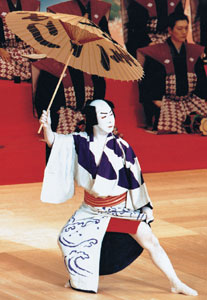
I went to the "culture center" today to watch a bit of ballet with an English teacher I work with. Her twelve year old daughter was performing in the recital. The program consisted of numerous songs being performed by children of all ages. I got to see everything from little 4 year olds stomping around to middle and high school students whose performances were quite impressive.
They played all sorts of different songs. Not being a conosseiur, I could only recognize a couple songs from the Tchaikovsky's The Nutcracker and Swan Lake. They also performed to numerous songs by Japanese Pop artists, which were not so impressive. Some of the music was downright painful to hear.
It also turned out that the teacher I went with was part of the volunteer staff, and couldn't see me. I also misunderstood her explanation of the event, thinking it was going to be a whole big production, instead of a collection of performances set to the latest bubble gum pop.
No matter how sophisticated and urbane a modern man might be, can only take so much. I reached my limit after 50 minutes of 9 year olds in fluorescent tutus prancing around to something like this.
Fox News Memo
While I don't want to make this blog a showcase of my political views, I thought some people might find this interesting. A memo at Fox News, which claims to be "fair and balanced." In this memo, the Fox Senior Vice president says (presumably to reporters and staff) "lets be on the lookout for any statements from the Iraqi insurgents, who must be thrilled at the prospect of a Dem-controlled Congress."
Subscribe to:
Posts (Atom)